
Orthopaedics & Spine Sub-treatments & Procedures
Advanced Joint Replacements, Spine Care, Robotic Surgery & Sports Medicine
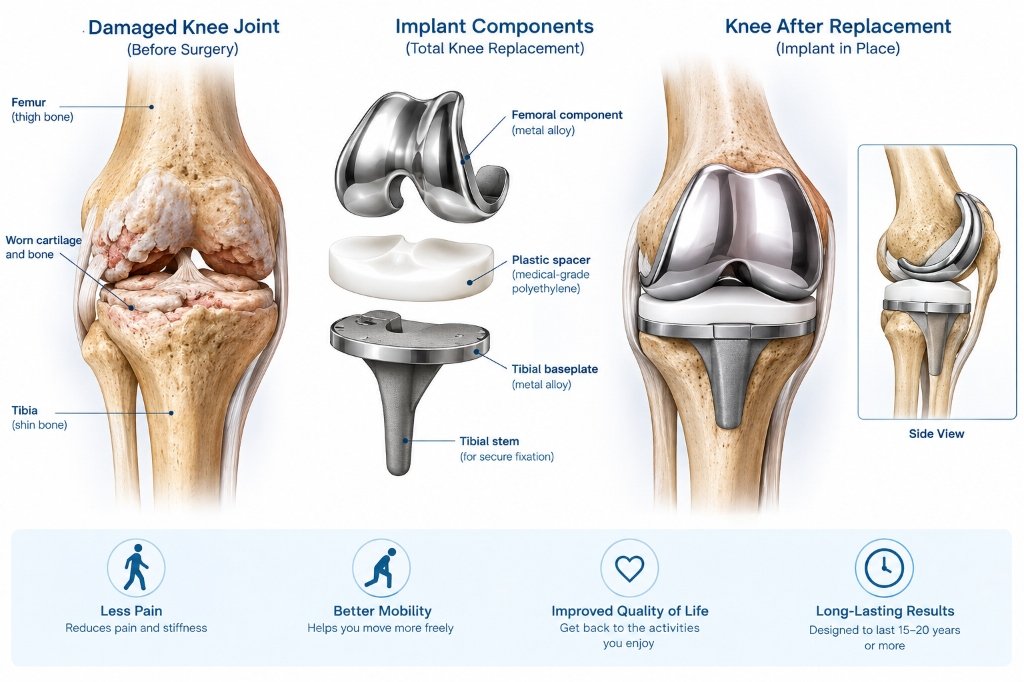
Total knee replacement
Total knee replacement (arthroplasty) is a surgical procedure to resurface a knee damaged by arthritis or injury. The procedure involves removing the damaged cartilage and bone from the surface of the knee joint and replacing them with an artificial implant (prosthesis) made of metal alloys, high-grade plastics, and polymers.
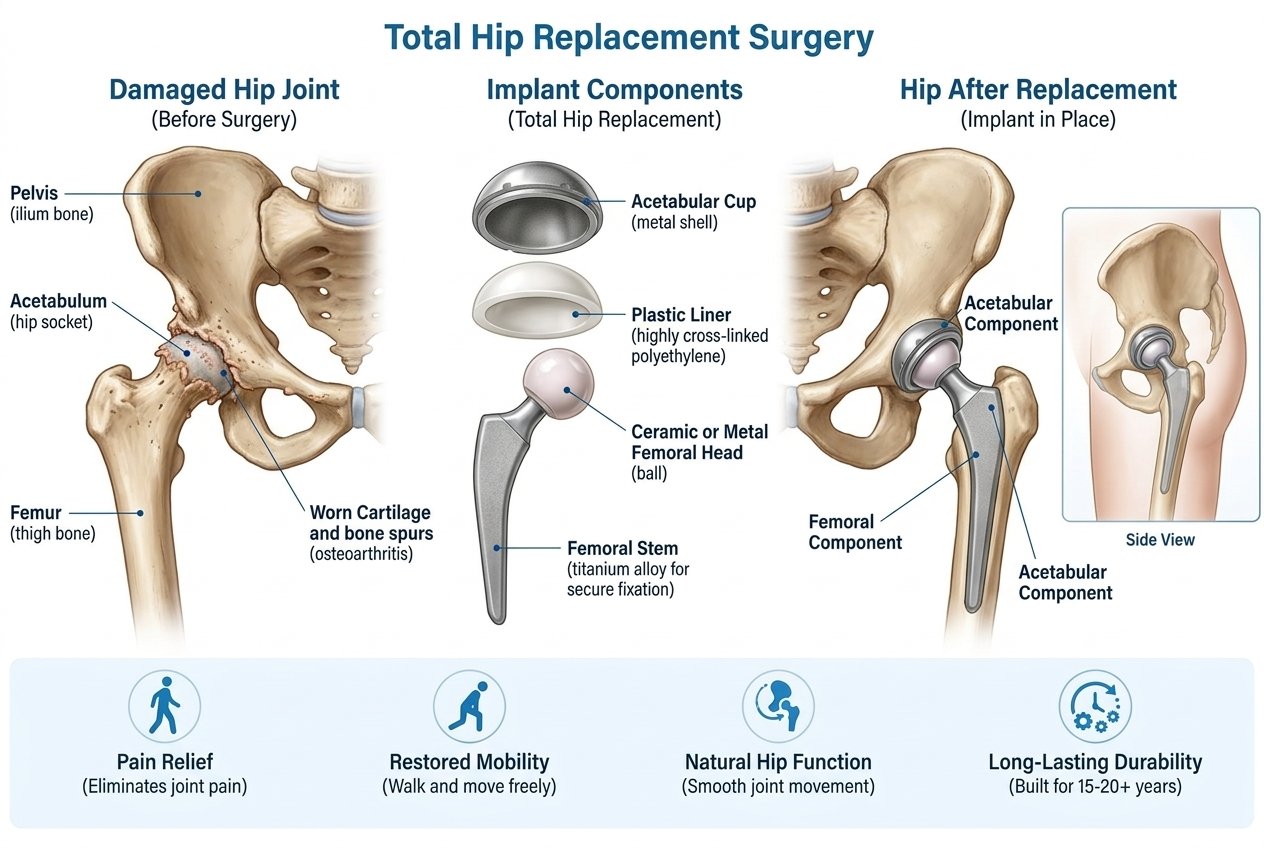
Total hip replacement
Total hip replacement (arthroplasty) is a surgical procedure where a diseased or damaged hip joint is removed and replaced with an artificial joint (prosthesis). The hip is a "ball-and-socket" joint; this surgery replaces both the ball (the femoral head) and the socket (the acetabulum) with metal, ceramic, or hard plastic components.
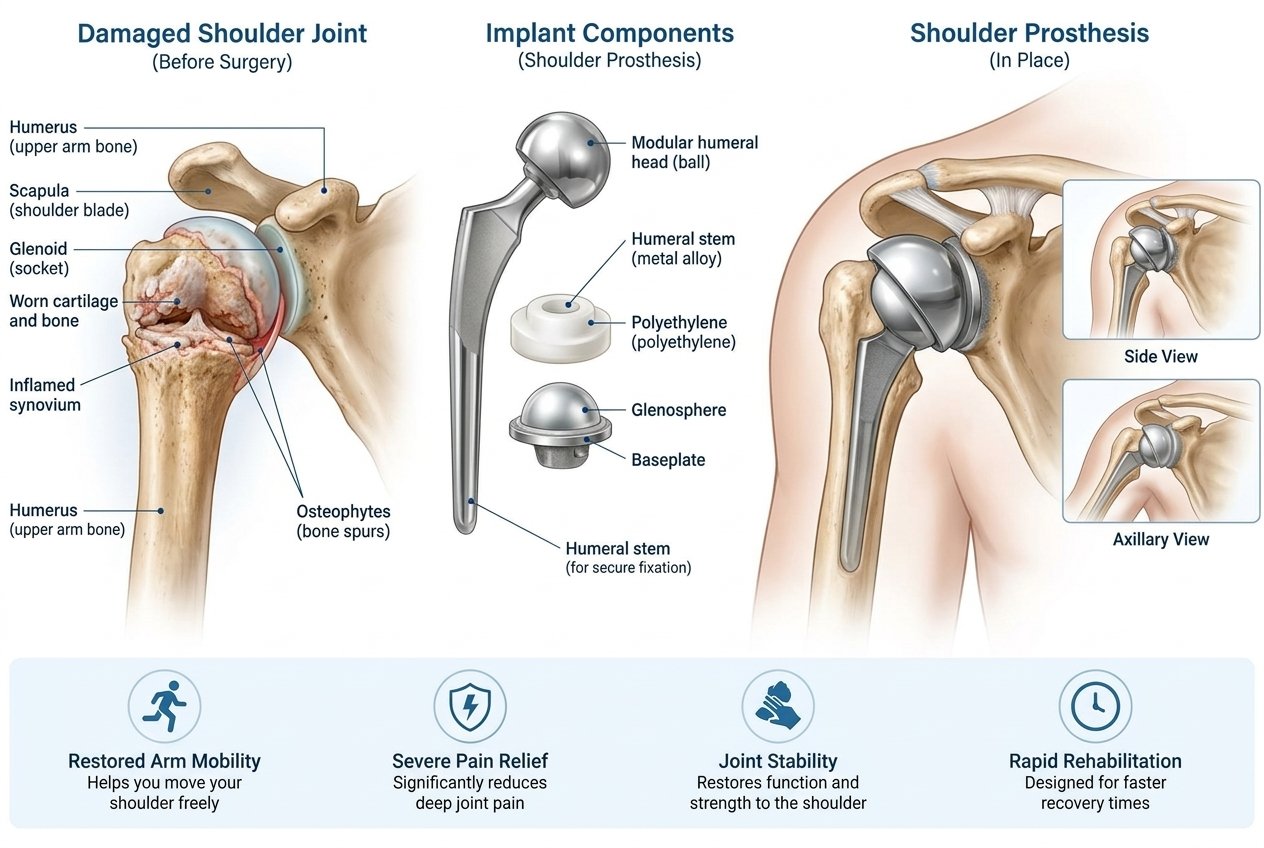
Shoulder & ankle replacement
Reverse Total Shoulder Replacement and Total Ankle Replacement reconstruct severe Glenohumeral and Talocrural joint arthritis, restoring arm lifting and foot walking function.
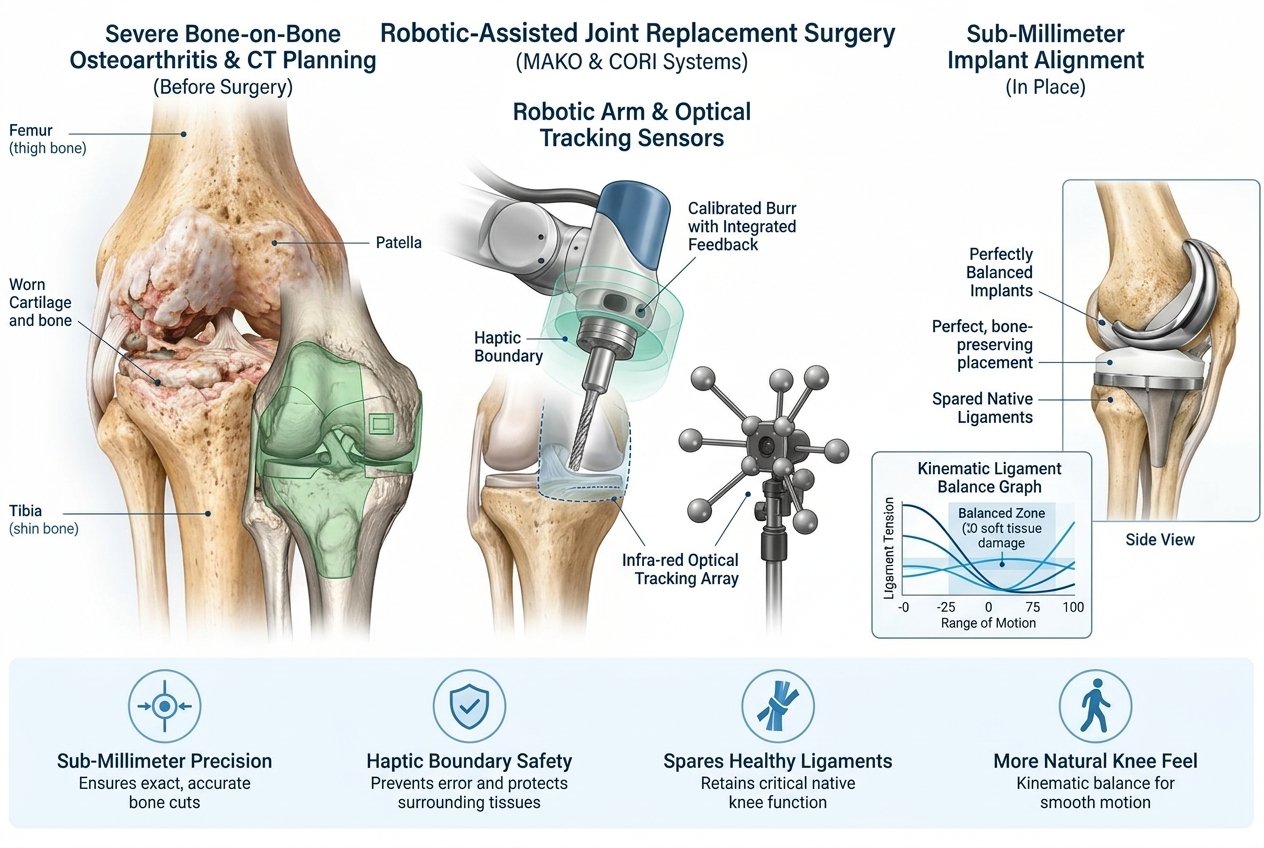
Robotic joint replacement (MAKO, CORI, Navio)
Robotic-assisted joint replacement is an advanced surgical technique where an orthopedic surgeon uses a robotic arm or a handheld robotic device to assist in performing total or partial joint replacements, primarily of the knee and hip. These systems enhance precision and allow for highly personalized surgical planning.
Unicompartmental (partial) knee replacement
Unicompartmental (partial) knee replacement is a surgical procedure that replaces only the damaged section of the knee joint, preserving the healthy bone, cartilage, and ligaments.The human knee is divided into three compartments: the medial (inside), the lateral (outside), and the patellofemoral (the front of the knee between the kneecap and thighbone). In a partial replacement, the surgeon removes arthritic tissue from just one of these compartments—most commonly the medial side—and caps it with a metal and plastic prosthetic implant.
3D-printed custom joint implants
3D-printed custom joint implants, created through additive manufacturing technologies, represent a paradigm shift in orthopedic arthroplasty from "one-size-fits-all" devices to patient-specific solutions. The technology transforms digital medical images (from CT or MRI scans) into a precise 3D model, which is then used to build an implant layer by layer using techniques like Selective Laser Melting (SLM) or Electron Beam Melting (EBM).
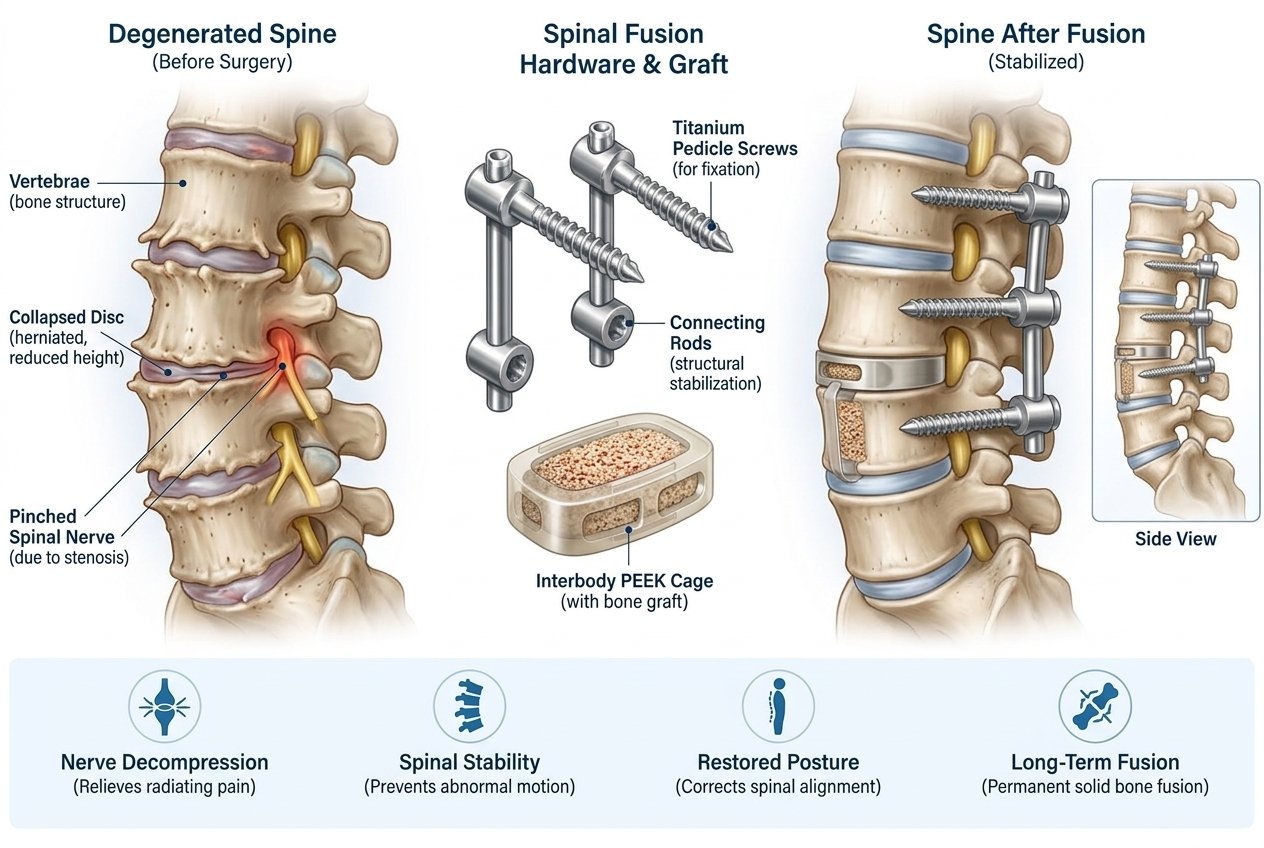
Spinal fusion surgery
Spinal fusion is a surgical procedure designed to permanently connect two or more vertebrae in the spine, eliminating motion between them. The procedure mimics the normal healing process of broken bones by using bone grafts and metal hardware to create a solid, single structure. It can be performed in the cervical (neck), thoracic (mid-back), or lumbar (lower back) regions of the spine.
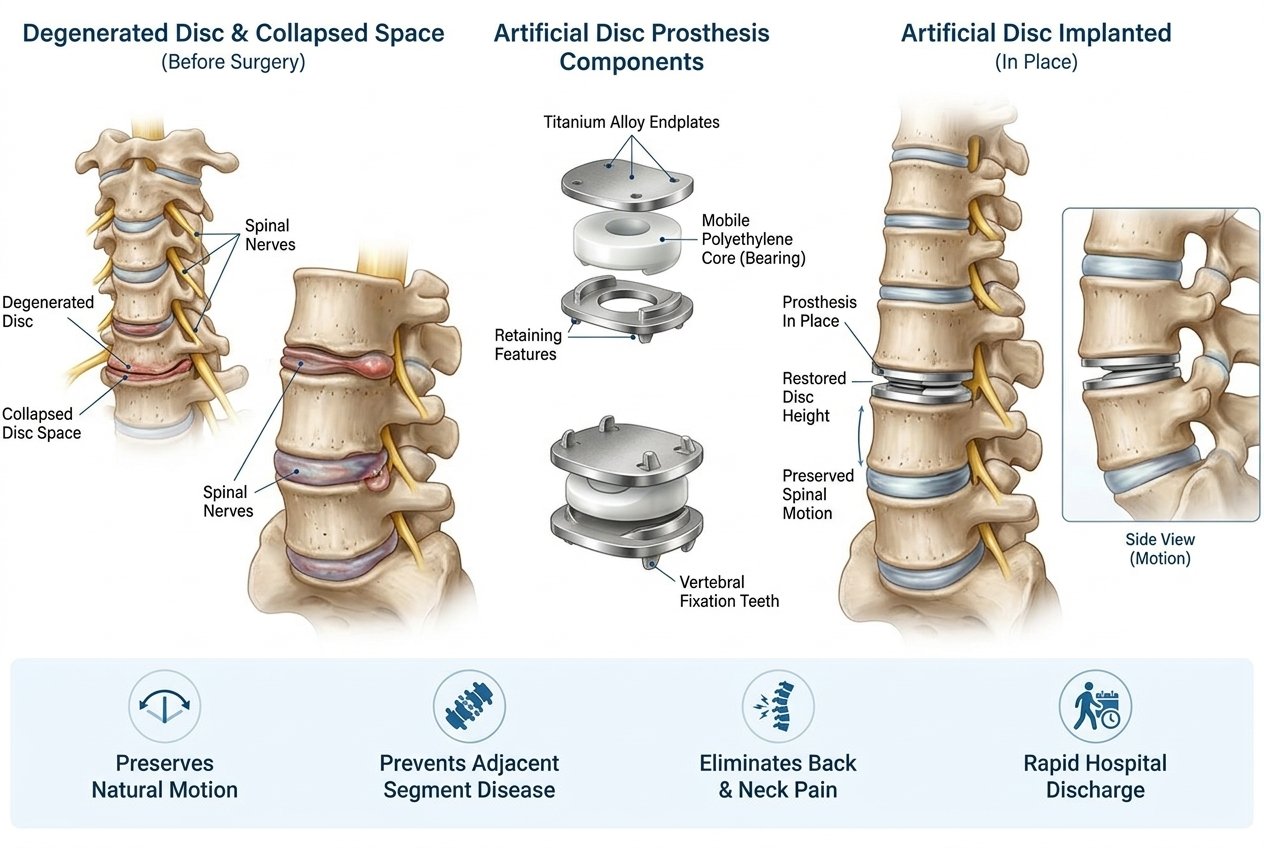
Artificial disc replacement (cervical & lumbar)
Artificial disc replacement (ADR), also known as total disc replacement, is a surgical procedure in which a degenerated or damaged intervertebral disc is removed and replaced with a synthetic implant. This procedure is an alternative to spinal fusion. While fusion permanently locks two vertebrae together, ADR is designed to preserve the natural motion (flexion, extension, and rotation) of the spinal segment. It is primarily performed in the cervical (neck) and lumbar (lower back) spine.
Scoliosis correction & deformity surgery
Scoliosis correction and deformity surgery is a major spinal procedure designed to straighten an abnormal curvature of the spine (scoliosis) or excessive forward rounding (kyphosis). The goal is to realign the spine, stabilize the structural framework, and halt the progression of the deformity, preventing severe cardiac or pulmonary complications that can arise when a severely curved spine compresses the chest cavity.
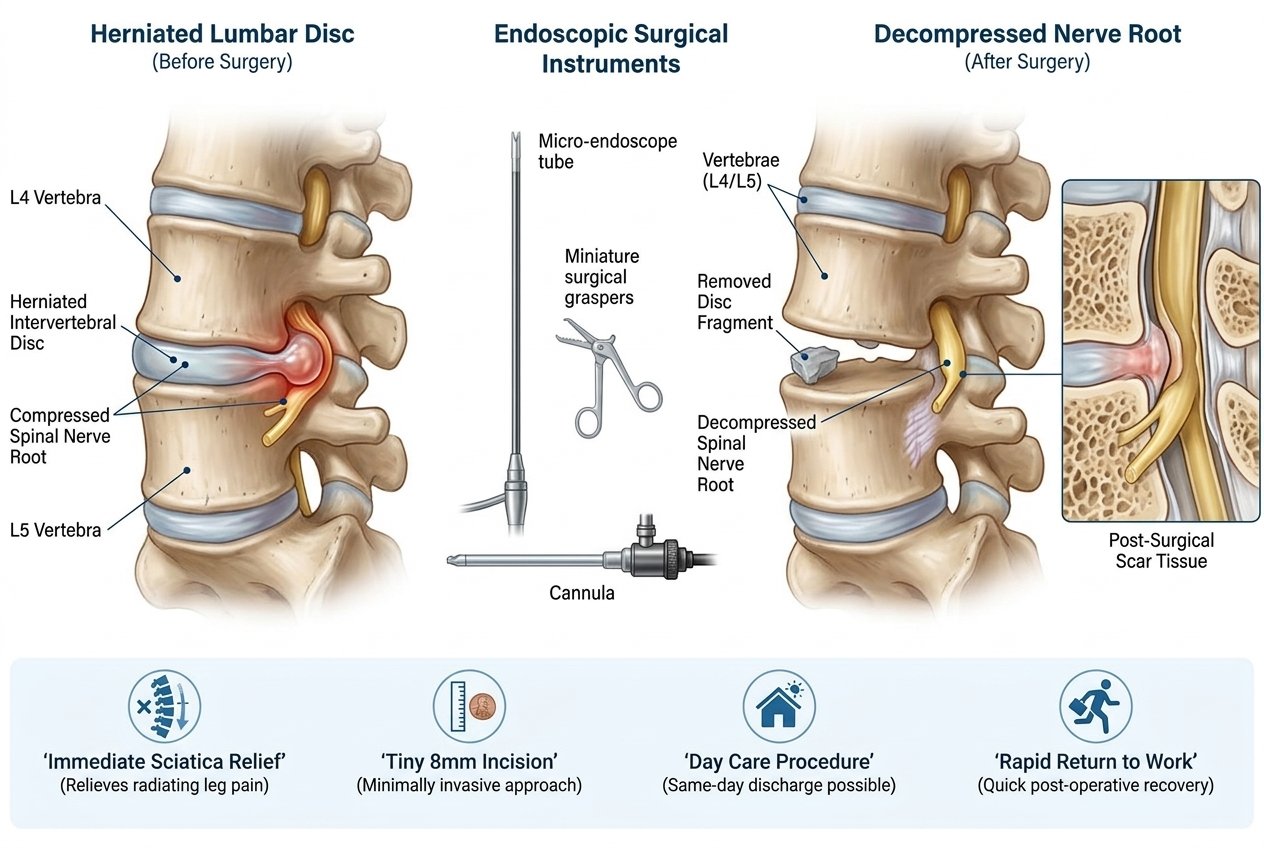
Minimally invasive spine surgery (MISS)
Minimally Invasive Spine Surgery (MISS) is a specialized surgical approach used to treat spinal disorders with less trauma to the surrounding muscles and tissues compared to traditional "open" spine surgery. Instead of making a long incision and pulling the back muscles away from the spine, MISS uses small incisions, specialized retractors, and advanced imaging technology to access the spine.
ExcelsiusGPS robotic spine surgery
ExcelsiusGPS is an advanced robotic navigation platform manufactured by Globus Medical, designed to improve precision, safety, and efficiency in spine surgery. It combines a rigid robotic arm with full navigation capabilities on a single platform, allowing surgeons to precisely place implants (like pedicle screws) during spinal fusion procedures.
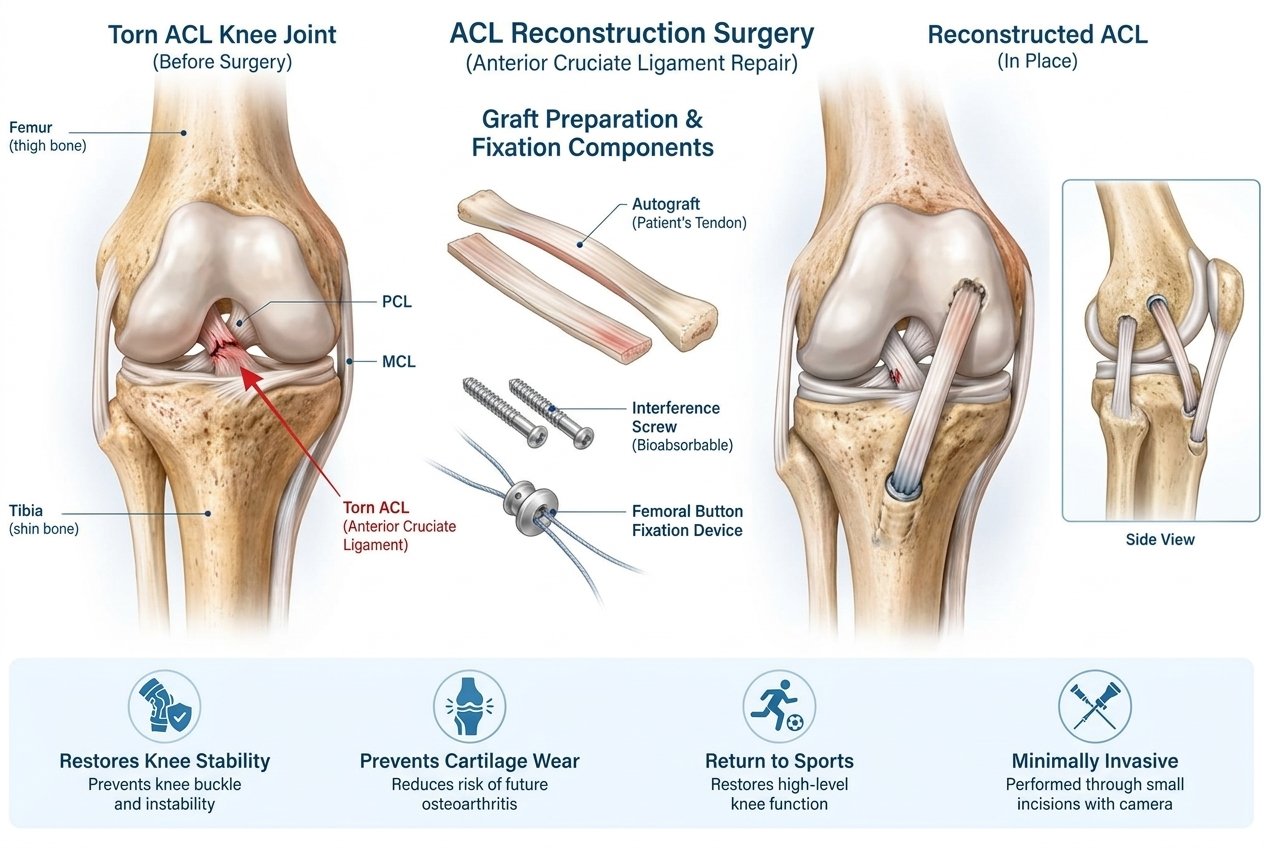
Sports injury & ACL / ligament reconstruction
Anterior Cruciate Ligament (ACL) reconstruction is a surgical procedure to replace a torn ACL, one of the major stabilizing ligaments in the knee. The ACL crosses diagonally in the middle of the knee, providing rotational stability and preventing the tibia (shinbone) from sliding out in front of the femur (thighbone). Because the ACL cannot heal on its own when completely torn, surgical reconstruction is often required to restore knee stability, particularly for active individuals.
Arthroscopic joint procedures
Arthroscopy is a minimally invasive surgical procedure used to diagnose and treat problems inside a joint. Instead of making a large incision to open the joint completely, the surgeon uses an arthroscope—a thin, pencil-sized tube equipped with a high-definition camera and a light source. This transmits a magnified image of the inside of the joint onto a video monitor, allowing the surgeon to see and work with extreme precision.
Limb lengthening & deformity correction
Limb lengthening and deformity correction are complex orthopedic procedures based on a biological process called distraction osteogenesis. This process exploits the body's natural ability to heal bone fractures. By deliberately cutting a bone and then very slowly pulling the two ends apart, the body continuously grows new bone tissue (callus) in the gap. Once the desired length or alignment is achieved, the new bone hardens (consolidates) into solid, normal bone.
Bone tumour surgery & limb salvage
Bone Tumour Surgery & Limb Salvage (often called limb-sparing surgery) is the modern standard of care for most malignant bone tumors (bone sarcomas) in the arms or legs. Historically, primary bone cancer was frequently treated with amputation. Today, advancements in surgical techniques, chemotherapy, and biomechanical engineering allow surgeons to remove the tumor while preserving the limb and restoring its function in over 85% of cases.
Cartilage restoration (ACI / OATS)
Autologous Chondrocyte Implantation repairs deep cartilage defects in young patients.
Revision joint replacement (failed implant)
Removes worn/infected prosthesis and reconstructs bone loss with revision implants.
Computer-assisted navigation surgery
Real-time infrared tracking of surgical tools for optimal joint implant positioning.
No Matching Procedures Found
We could not find any procedures matching your search query.
Unsure Which Surgical Procedure is Recommended for Your Condition?
Upload your diagnostic scans and coronary reports. Our medical board will review your case and provide transparent hospital recommendations with cost comparisons.